From AI Experimentation to Enterprise Rewiring
Insights from the Melbourne Chief People Officer Roundtable
- Date:
- 2 June 2026
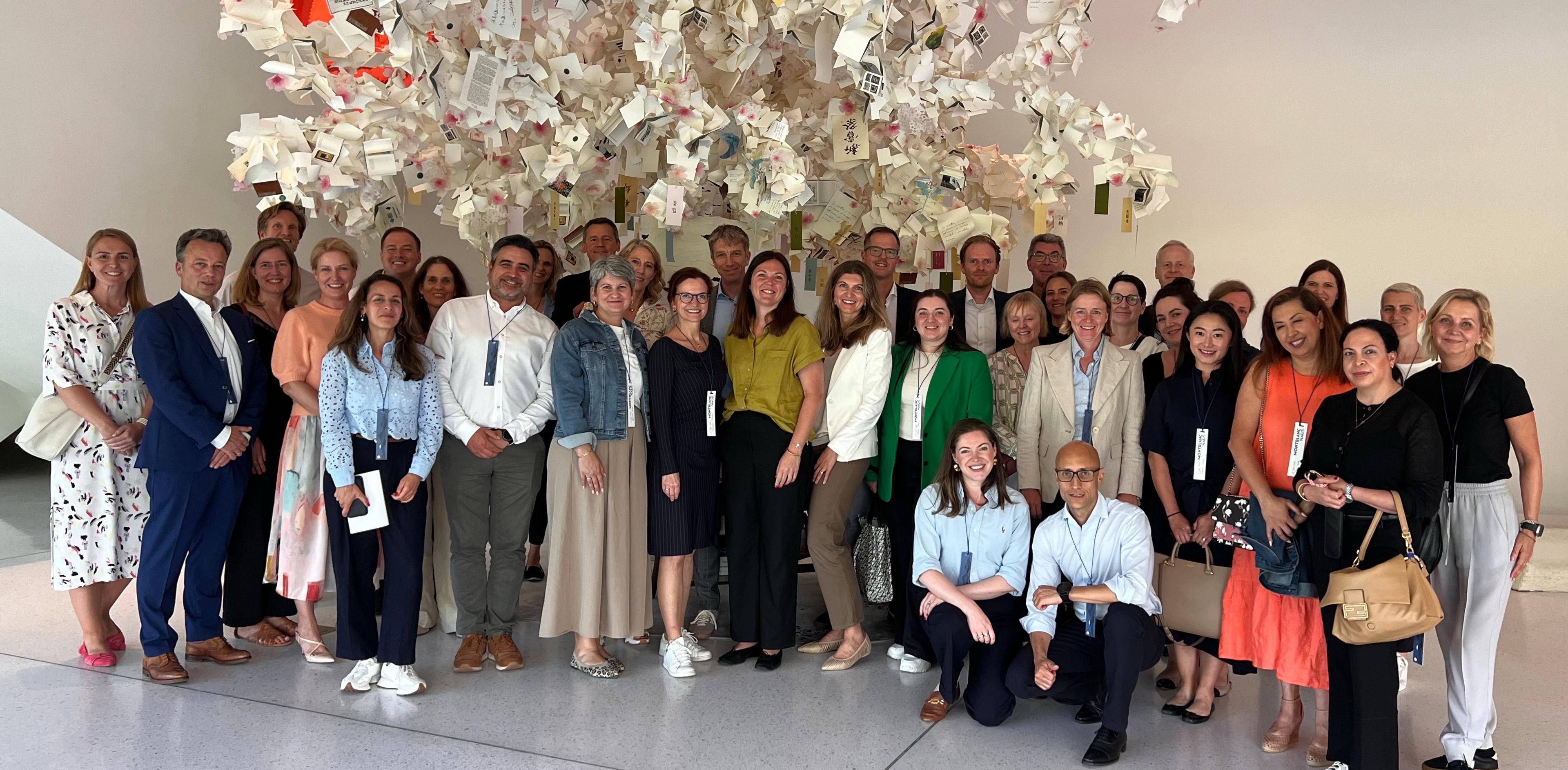
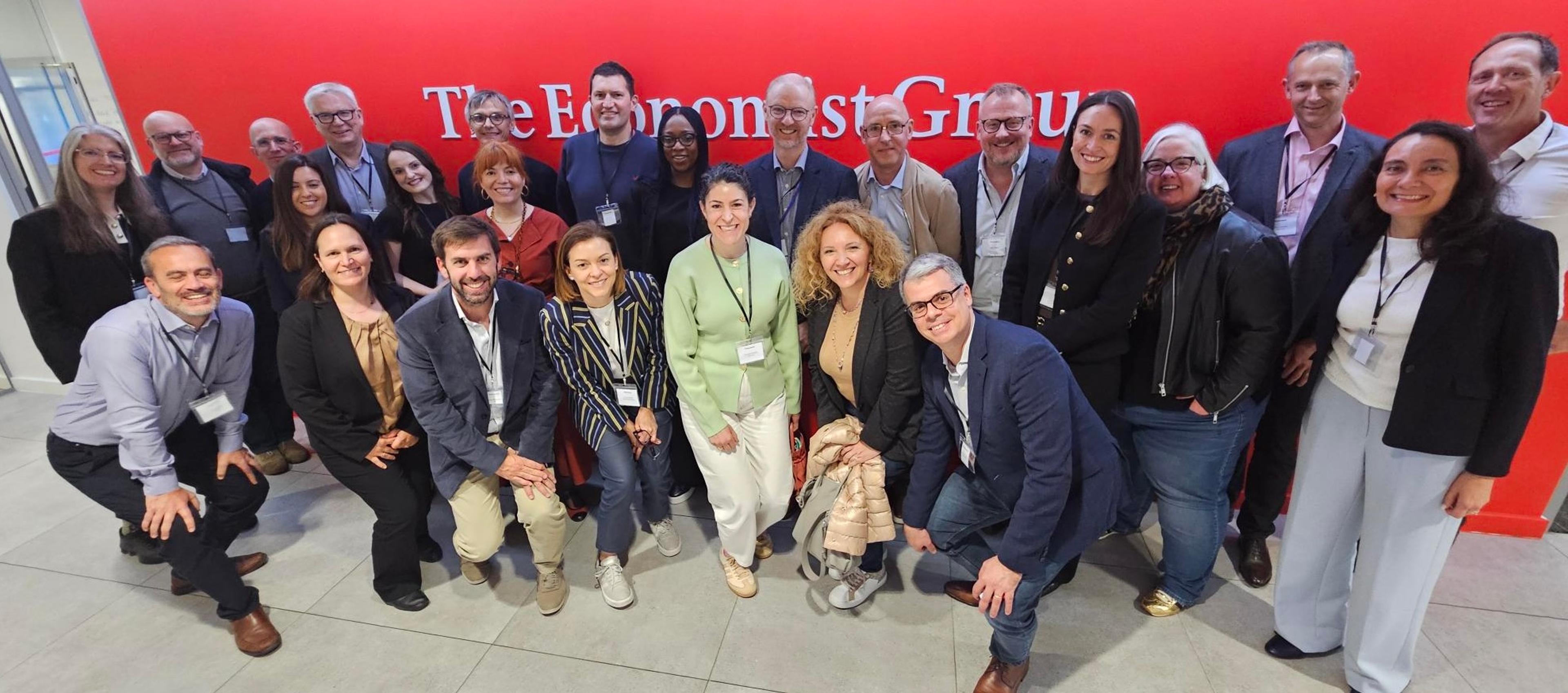
At the Melbourne Chief People Officer roundtable, hosted in partnership with Ben Bars, We Are Unity and Natalie Jones, Quantium, we explored how organisations are grappling with rewiring themselves around AI.
The conversation reflected a shift from AI as a productivity lever to AI as a catalyst for organisational reinvention. Where organisations are creating the most value from AI, leadership teams are not treating it as optimisation, but as a redefinition of what the organisation can become. This requires not just investment, but a willingness to rethink structure, capability, and operating model design. Leaders are moving from creating ‘a great place to work’ to creating ‘a place where great work is done’.This is forcing a redesign of expectations around productivity, accountability, and how value is defined at every level of the organisation.
CPOs consistently highlighted that meaningful re-imagination does not emerge from within the system that created the existing process. It requires what many described as an “agitator” - someone deliberately outside the function, able to challenge embedded assumptions. Without this external lens, organisations risk optimising what already exists rather than redesigning what is possible. In practice, many are now adopting sprint based delivery models to support this work. Short cycles, rapid experimentation, and iterative redesign are becoming the norm, replacing large-scale transformation programs that struggle to keep pace with AI enabled change.
While executive alignment is strengthening, resistance remains in the middle of organisations, perhaps not due to capability gaps, but due to identity threat. As roles shift, the question of relevance becomes increasingly acute. Many organisations are experiencing a “swell” from younger cohorts who are adopting AI faster, experimenting more freely, and often pulling the organisation forward from below. This is putting traditional compensation models under pressure. In several organisations, individual contributors deep within the structure are now managing multiple AI agents and generating disproportionate value relative to their formal position in the organisational structure. This is challenging assumptions about role design, value attribution, and reward structures.
A further distinction emerged around value creation at scale. While individual AI use is now widespread, the real step-change occurs when AI is adopted at a team level. In these environments, CPOs described up to tenfold gains in productivity and decision velocity. The key difference is structure. When AI is embedded into team workflows with clear boundaries between human and agent responsibility, inefficiency reduces and coordination improves. Some organisations are going further, experimenting with virtual boards to simulate operating model decisions, brand choices, and commercial scenarios. These environments are becoming low-risk spaces for high-impact experimentation.
As AI adoption matures, organisations are also grappling with the complexity of their underlying systems. Many CPOs noted that end-user friction remains high due to fragmented data environments and legacy technology stacks. Yet there was a clear consensus that waiting for perfect data was not an option. Instead, organisations are shifting toward iterative improvement. AI is not expected to solve data complexity directly, but to reveal it by surfacing where issues exist so they can be addressed progressively. This is enabling faster deployment cycles and reducing organisational paralysis. A parallel conversation focused on system architecture choices, particularly the balance between open and closed ecosystems. Again, it was agreed that pragmatism was key - progress over perfection, delivered through short, continuous sprints of improvement.
As AI becomes more embedded in decision-making, governance has become increasingly important. CPOs emphasised the need for clear parameters around what AI should and should not do. Equally important is the role of human judgement. The ability to interrogate outputs, refine prompts, and resist first-pass answers is becoming a core organisational capability. In this context, curiosity and learning agility are emerging as defining traits of high performing teams.
Beyond capability and systems, a more human question surfaced. Leaders recognise an obligation to actively manage energy in the workplace. The impact of constant context switching and augmented decision-making through agent management at scale is placing renewed emphasis on psychosocial safety, protecting attention, reducing complexity, and enabling sustainable performance.
Overall, AI is no longer a productivity lever but an organisational redesign challenge. The organisations pulling ahead are those willing to fundamentally rewire how work is defined, distributed, and valued, moving beyond optimisation to intentional reinvention of the enterprise.