Creating High Performance Culture Amid Ever-Increasing Complexity and Rapid Change
A London HR Leaders Forum
- Date:
- 7 July 2026
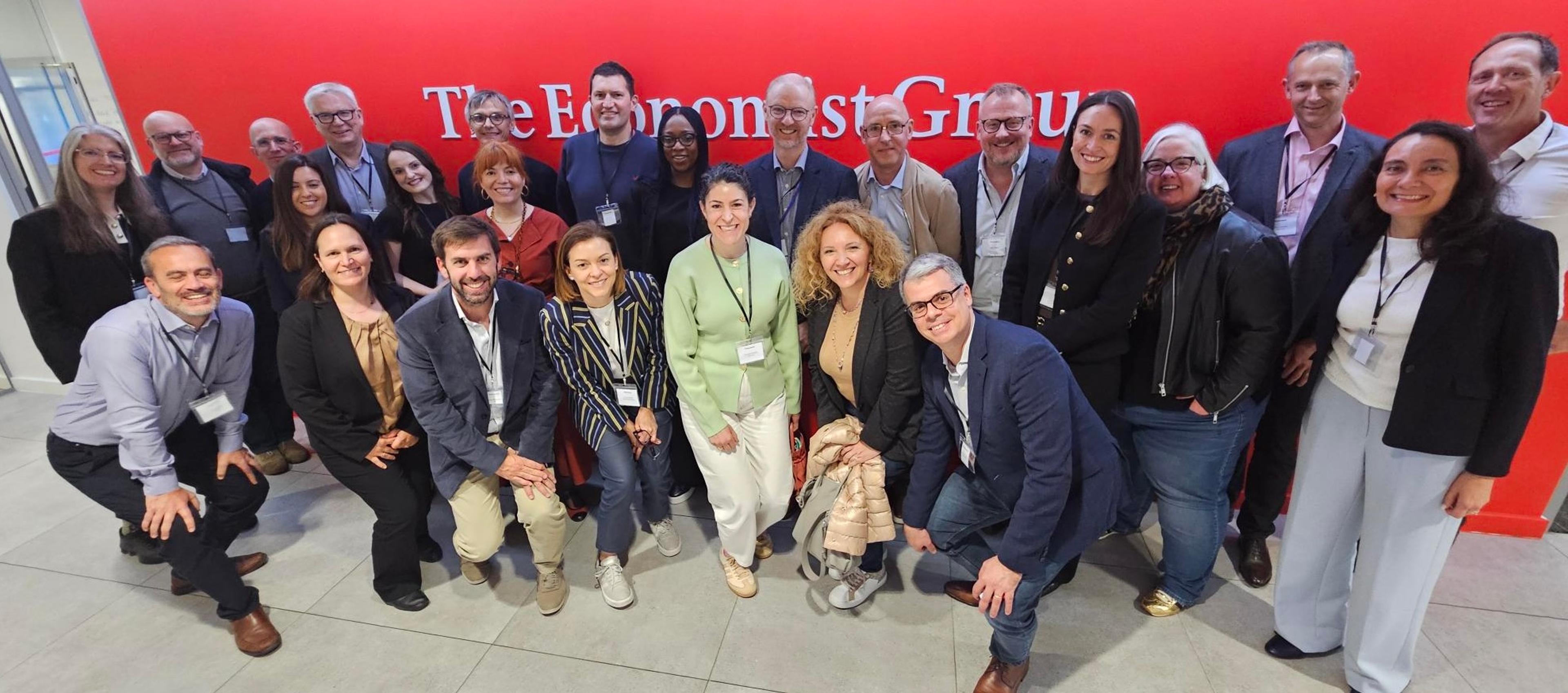
ChapmanCG partnered with The Economist and Concio to host a private roundtable with a select group of senior HR leaders at The Economist’s London offices.
The session was designed as an interactive working discussion rather than a traditional panel event. Attendees were split into groups to explore the performance levers they believe most materially contribute to creating and sustaining high-performance cultures today.
While each group approached the topic differently, several clear themes consistently emerged throughout the morning.
Are Traditional Operating Models Still Fit for Purpose?
One of the strongest discussion points centred around the growing pressure on traditional organisational structures.
Several groups debated whether many operating models were built for a different era, one defined by stability, clearer hierarchy and more predictable change cycles. In contrast, today’s environments increasingly demand:
- Faster decision-making
- Greater adaptability
- Cross-functional collaboration
- Stronger customer alignment
- Continuous capability evolution
A number of participants discussed the idea of moving away from rigid functional models towards structures designed more intentionally around capability, customer outcomes, and problem-solving.
There was also recognition that many organisations are still balancing efficiency and control against the need for speed and flexibility.
Embedding Agility Beyond Process
Another key area of discussion focused on agility and whether organisations have genuinely embedded adaptable mindsets at scale.
While many businesses have adopted agile frameworks or fundamentally changed their ways of working, participants questioned whether cultural agility has evolved at the same pace.
The conversation has moved beyond flexible working and into broader questions around:
- Work design
- Leadership behaviour
- Organisational adaptability
- Employee mindset
- Comfort with ambiguity and change
A recurring point was that agility is increasingly becoming a cultural capability rather than simply an operational methodology.
Leading Across Generations and Machines
One of the more thought-provoking conversations centred around the increasing complexity of leadership itself.
For perhaps the first time, organisations are simultaneously managing:
- Multiple workforce generations
- Rapid AI integration
- Machine-enabled capability
- Constant technological evolution
- Changing employee expectations
This led to debate around how leadership styles, communication approaches and employee engagement models may need to evolve in response.
Several leaders reflected on the challenge of creating consistency and cohesion across highly diverse employee populations while also managing the rapid rate technological change.
Communication, Storytelling and Culture
The role of communication emerged as a major performance lever throughout the morning.
Participants discussed how high-performance cultures increasingly rely on leaders being able to communicate vision, purpose and change in ways that feel authentic, human and relatable.
Storytelling was repeatedly referenced as a critical leadership capability, particularly during periods of uncertainty or transformation.
Several leaders discussed the balance between:
- Clear top-down direction
- Grassroots collaboration
- Psychological safety
- Shared accountability
- Purpose driven leadership
There was a strong sense that culture today is reinforced less through process and more through clarity, consistency and shared understanding.
Values That Can Withstand Change
Culture and values themselves became a significant area of debate.
Rather than static corporate statements, many discussed values as behavioural anchors that help organisations maintain identity and consistency while continuing to evolve.
Questions raised:
- How do organisations preserve culture during continuous transformation
- Can values remain stable while operating models constantly evolve?
- How do leaders create alignment without creating rigidity?
- Several leaders reflected on the importance of creating cultures that are adaptable without becoming directionless.
Simplicity as a Performance Advantage
Despite the complexity of the topics discussed, one of the clearest themes across the morning was simplicity.
Many argued that high performance often comes from:
- Clear priorities
- Simple communication
- Faster execution
- Empowered teams
- Reduced organisational friction
Starting small, moving faster, and creating environments that encourage experimentation were all discussed as increasingly important for sustaining performance over time.
Final Reflections
A consistent takeaway was that high-performance cultures are becoming less about rigid structures or fixed models, and more about building organisations capable of continuous adaptation without losing cohesion, purpose or human connection.
As businesses continue navigating technological acceleration, workforce evolution and shifting societal expectations, the discussion reinforced the idea that the future of performance may rely on organisations becoming simultaneously more agile, more human and more intentional in how they lead through change.