What Can Established Organisations Learn from AI-Native Businesses?
- Date:
- 16 September 2025
Organisations are grappling with how to integrate artificial intelligence into businesses that were never designed for it. Leaders are asking where AI should sit, who should own it and how to encourage experimentation without introducing unnecessary risk.
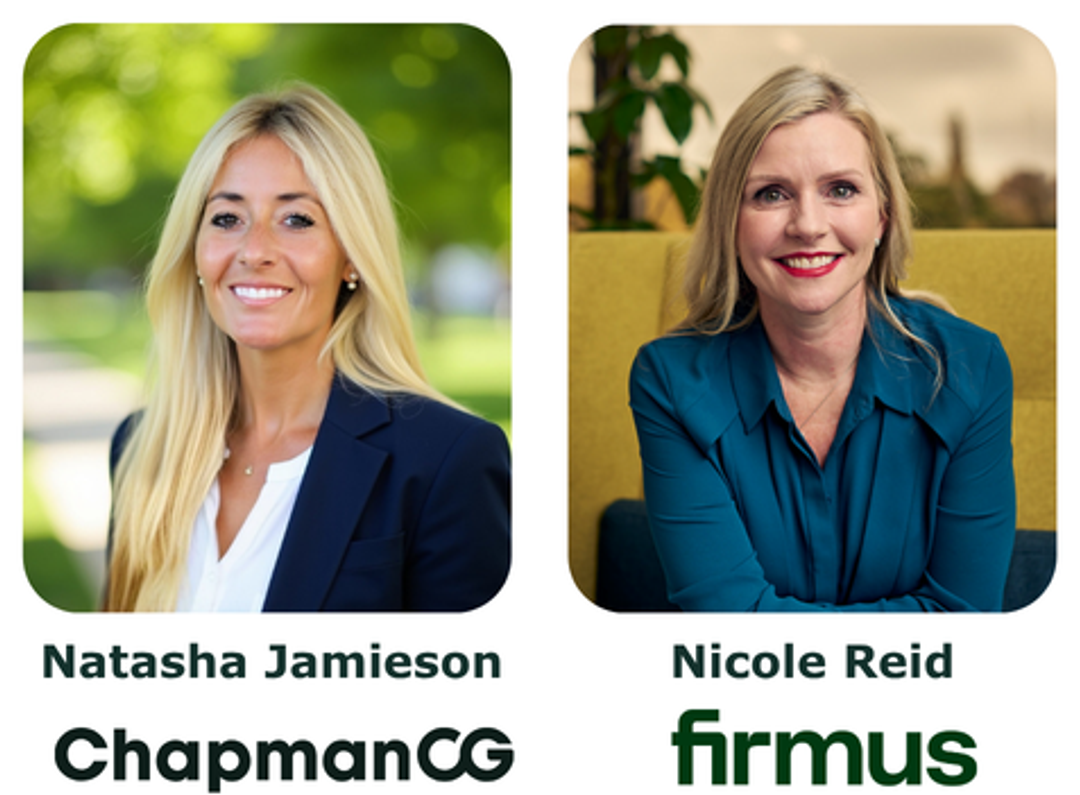
Nicole Reid, Chief People Officer at Sydney-based Firmus Technologies, is approaching the challenge from a different starting point. Firmus is an Australian-founded AI infrastructure company building energy-efficient AI factories across Australia and Asia-Pacific, providing the computing power required to train and run increasingly sophisticated AI models.
After senior People leadership roles at Xero, Microsoft and AMP, Nicole is now helping to shape a business that integrates AI from the outset rather than adding it to a legacy operating model. While most organisations cannot begin again, they can reconsider the assumptions underpinning how they operate.
AI as an Organisational Design Principle
For many organisations, AI remains a technology initiative, introduced through isolated pilots or productivity tools. For Nicole, it is much broader.
I’m not changing something that’s already in place. I’m building everything from scratch, thinking like a native AI company.
That mindset changes the question from where AI can automate existing work to how an organisation should be designed when AI is assumed to be part of every workflow. It influences structure, capability, collaboration and the skills a business will need as it grows.
Established organisations do not need to dismantle everything already in place. They do, however, need to challenge processes designed for a different operating environment and ask whether each workflow should exist in its current form at all.
Small Teams, Bigger Capability
One of Nicole’s strongest leadership principles is remarkably simple:
Small teams, big tools.
Rather than defaulting to more people, she encourages leaders to pause and ask:
“Do we actually need extra headcount, or can we think about getting better tools?”
AI is not only helping people perform existing jobs faster. It is changing how organisations approach scale. Leaner teams equipped with sophisticated tools can create greater impact without continually adding complexity.
This requires leaders to understand the work in detail: which activities demand human judgement, which can be supported by technology, and whether teams have the tools and skills to perform at their best. The opportunity is not to replace people, but to amplify what they can achieve. Workforce planning therefore becomes as much about capability investment as headcount.
Reframing the AI Conversation
Much of the discussion around AI focuses on efficiency and cost reduction. Nicole believes that narrative is too narrow.
Rather than have AI be the lever for cost out, I think we should change the narrative. Make AI the lever for productivity, more revenue and more growth.
Automation will improve efficiency, but the larger strategic opportunity is to increase capacity and create new value. AI can help teams analyse information and explore ideas at scale, while freeing people to focus on work requiring insight and judgement.
Framing matters. When AI is presented primarily as a cost-cutting mechanism, it is likely to create concern. Positioned as a way to improve work and unlock growth, it can encourage employees to engage with the possibilities it creates.
Leading Through Experimentation
As AI capabilities evolve rapidly, leadership is becoming less about having every answer and more about creating an environment where experimentation is part of everyday work.
The technology is innovating all the time, so my message is just keep pushing, keep trying.
Nicole encourages curiosity and continuous learning as teams explore tools including ChatGPT, Claude and Copilot. Leaders need to make it acceptable to test new approaches and learn from experiments that do not deliver the expected result. Employees also need time to develop new working practices, rather than treating adoption as another task added to a full workload.
Experimentation must be supported by clear guardrails that protect organisational data without preventing meaningful exploration. It must also be accompanied by critical thinking.
t hallucinates. Don’t take it for granted. You still need a human overlay.”
Human Judgement Becomes the Competitive Advantage
As AI takes on repetitive work, judgement, context and creativity become more valuable.
Get it to do the heavy lifting, then apply our thinking, our judgement, our creativity and our nuance.
AI can remove administrative work and create more space for thoughtful decisions and relationships. Organisations will therefore need to rethink how they identify and develop talent. Technical knowledge will matter, but so will asking effective questions, assessing information quality and applying judgement in ambiguous situations.
Nicole does not believe AI will eliminate graduate opportunities. Instead, it may allow graduates to contribute meaningful thinking earlier. If traditional foundational tasks are automated, however, leaders will need new ways to build context and commercial understanding. AI infrastructure will also create new career pathways, requiring organisations to reskill people from adjacent industries and plan for roles that barely existed a few years ago.
Looking Beyond Legacy Thinking
AI is prompting organisations to question assumptions that have shaped work for decades. The conversation extends beyond technology to organisational design, decision-making and the structure of work itself.
Rather than asking where AI fits into the existing organisation, leaders should ask whether they need another person or better tools; whether teams are designed for how work has always been done or how it could be done; and whether AI is merely accelerating work or changing how value is created.
The greatest advantage may not go to the fastest adopters, but to organisations willing to rethink work, build teams differently and create environments where people and technology complement one another.