Culture & Business Transformation
Managing Change in Korea: Do You Have a Fat Middle?
- Date:
- 25 February 2016
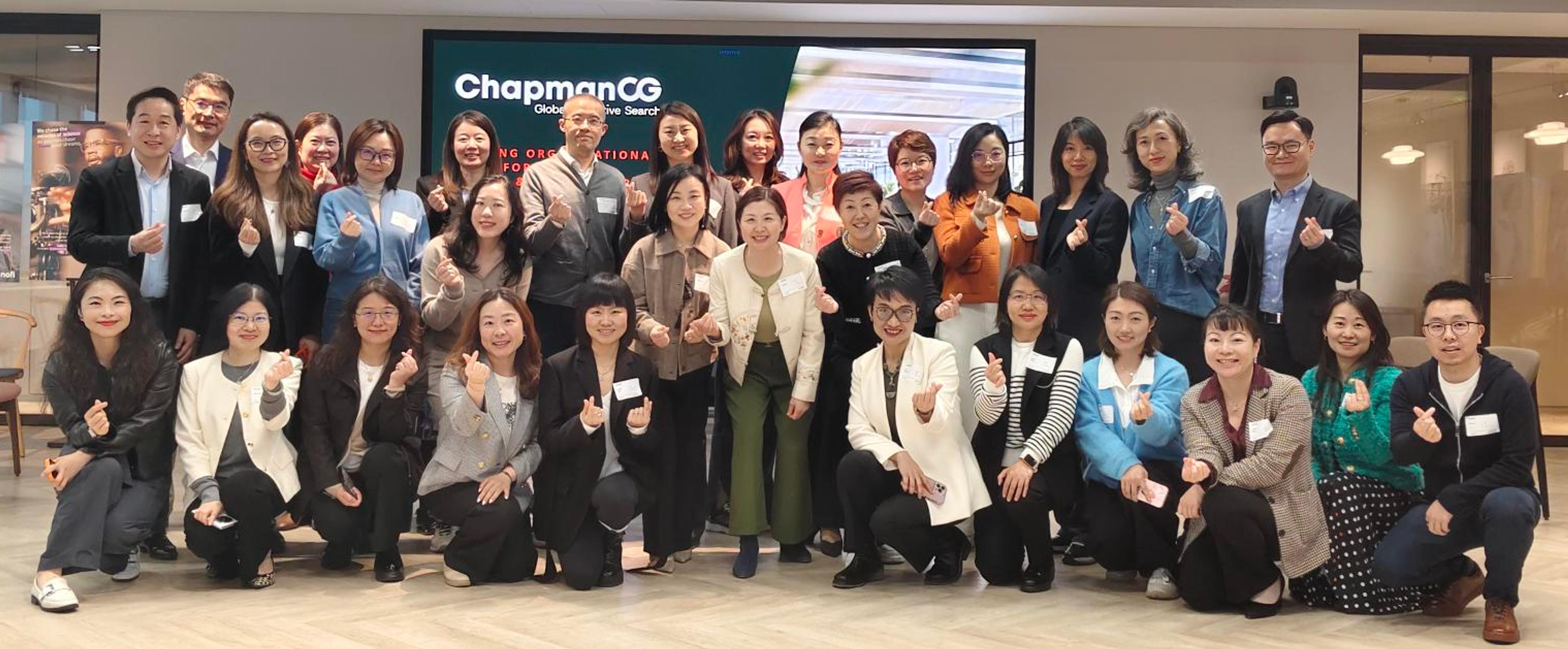
In mid-February 2016, ChapmanCG held a series of meetings in Seoul for our community of HR and Talent Leaders in Korea. We were kindly hosted by Standard Chartered Bank and Energizer, and attendees at the meeting came from a wide array of industries. Among the groups were senior HR leaders from companies such as Amazon, BNY Mellon, British American Tobacco, Delphi, Doosan, eBay, Ecolab, Estee Lauder, GlaxoSmithKline, Johnson & Johnson, Philips, RB and Schneider Electric.
The common theme of both meetings was the issue of managing big company changes in the context of Korea. For many HR leaders the subject of change in Korea can immediately cause stress, because senior and mid-ranking employees have a reputation for being very resistant. To compound matters, they are often backed by strong unions, which can make even incremental changes very difficult to accept. As with any change management programme, anywhere in the world, there is always a problem when change happens too frequently, and Employee Engagement can suffer the ‘death from a thousand cuts’ syndrome. In Korea particularly, it is of paramount importance to make changes swiftly, sensitively, and also comprehensively, in order to avoid this scenario.
If You’re Going to Make one big Change, Why not Make Ten?
In one case study, a company had recently gone through a separation into two different entities. Employee Engagement had been plummeting before the change, with rumours circulating about what was going to happen. To some extent, the process of repeated and consistent communication, with as much one-on-one face time as possible, helped to assuage this situation, but attrition was still at 30% - a number which speaks for itself.
The reason why this was presented as a case study of success rather than failure is because of what happened directly after the separation. The company was able to part from the previous CEO, who had been running the organisation with an autocratic style. This in turn led to many changes that would never have been accepted before, including greater communication, increased usage of cross-functional teams, and a more customer-focused culture and attitude to business. The company closed down some offices and employees who had been based in these converted to remote working, and it relocated the Korea head office to one with a floor plan that allowed for more transparency. None of these changes were ‘needed’, but all of them were desirable, and had been discussed for many years before the company separation provided the impetus to carry them out. Through all of these efforts, the leadership and the HR team together were able to instil a new and unified company mission, which meant that the post-separation attrition rate was much lower than the original prediction of 20% - it was 0%.