Culture & Business Transformation
Evolving Culture to Drive Performance in a World of Volatility and Uncertainty
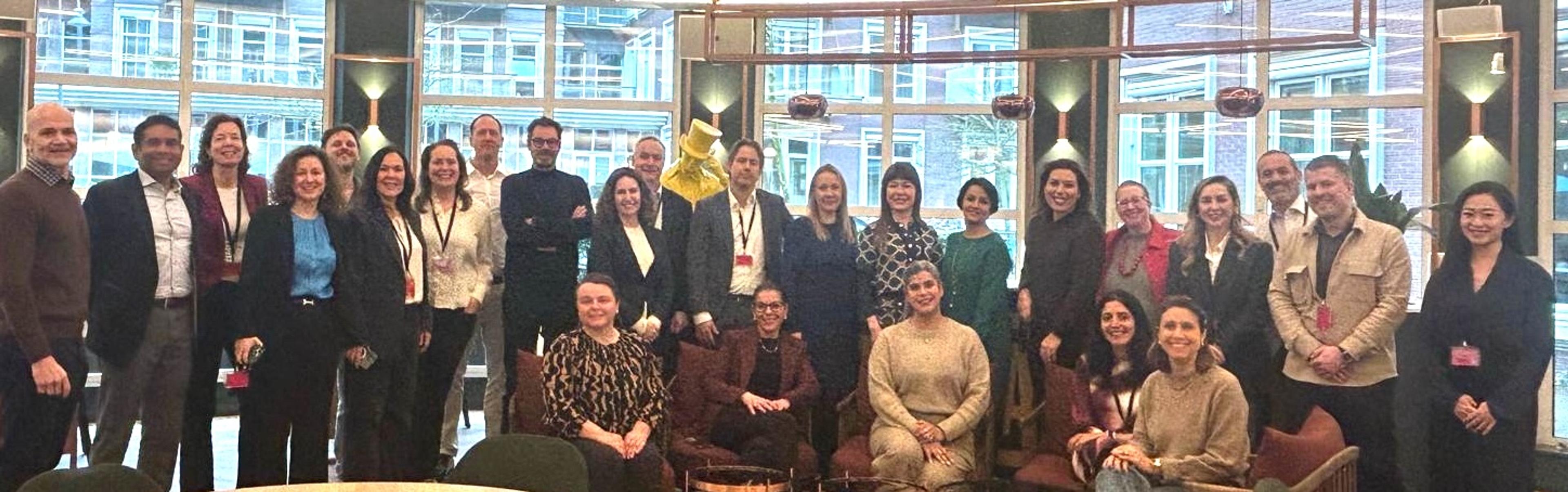
Global HR leadership gathering in Amsterdam
- Date:
- 24 February 2026
Organisations today are operating in an environment of uncertainty, rapid change, and performance pressure. The challenge is more than transformation and delivery alone— companies are increasingly expected to perform while transforming, sustaining current results, and while building future capabilities. This reality places culture at the centre of business success.
Together with Tatiana Sereno, HR SVP at Diageo and our partners at Concio, we gathered senior HR leaders in Amsterdam to discuss how to balance the complexities of building a performance culture amidst complexity and ambiguity.
Organisational Balance
A recurring theme in our global HR leadership discussions was the growing need to balance accountability with autonomy. Enabling the business means creating conditions in which individuals and teams have the freedom to act, experiment, and innovate while remaining clearly accountable for outcomes.
This balance is particularly important in talent and leadership. Businesses benefit from maintaining a healthy mix of internal and external talent, combining institutional knowledge with fresh perspectives. At the same time, organisations must be willing to question existing norms and, when necessary, evolve their culture to remain competitive and relevant and not complacent.
The Need to Pivot
Leadership agility is a critical capability in this landscape. Senior leaders play a key role in setting the mission, vision, and values, but culture is not shaped by executive teams alone. The composition, style, and alignment of leadership teams influence consistency and direction, yet middle management is equally crucial in translating strategy into everyday action. Culture is reinforced — or weakened — through daily decisions, conversations, and priorities.
Execution frameworks provide the structure that makes culture sustainable rather than symbolic. Governance, organisational design, business processes, and performance management systems must work together to clarify both why things are done and how they are delivered. When systems and culture are aligned, organisations are better placed to maintain high performance over time.
Team Recognition
Equally influential is the question of which behaviours are rewarded and recognised. Recognition shapes norms. The signals organisations send through incentives, feedback, and visibility often have more impact than formal policies. Beyond formal hierarchies, internal networks and informal collaboration channels also play a significant role in driving momentum and innovation across the company.
Understanding stakeholders — employees, customers, partners, and the wider ecosystem — remains fundamental. Culture and performance are ultimately experienced through these relationships, so awareness and alignment are essential.
Developing Future Culture
In a volatile and ambiguous world, the pursuit of certainty can be limiting. Sustainable progress requires a willingness to take calculated risks, experiment with new business models, and empower those ready to lead small but meaningful initiatives. There is rarely a completely safe path to greatness; the organisations that thrive are those that build cultures capable of navigating uncertainty with clarity, accountability, and shared ownership.
Evolving culture is not a one-off programme or a communications exercise. It is an ongoing leadership discipline that integrates people, systems, and strategy to build resilience and consistent performance — even as the environment continues to shift.
In partnership with

Authors