From Well-Being to Biology
A New Lens on Resilience and Performance
- Date:
- 20 May 2026
Over the past decade, the well-being agenda at work has mostly focused on mental health, often viewed in isolation. However, performance, resilience, and energy are not solely cognitive; they are also biological.
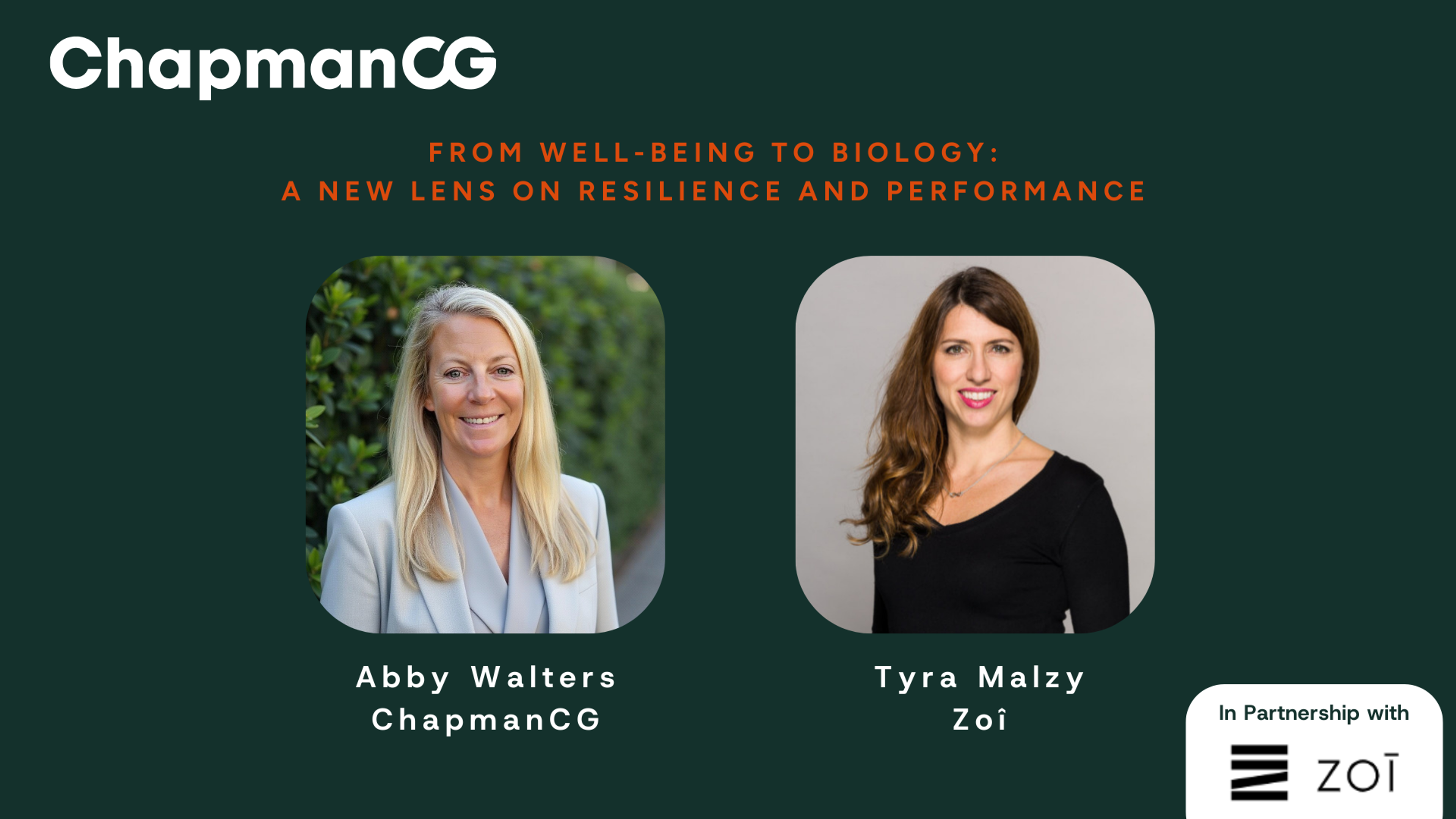
In this conversation, Managing Director Abby Walters is joined by Tyra Malzy, Chief People Officer at Zoi, to explore what changes when organisations stop treating people as “brains on sticks” and start recognising the biological foundations that affect decision-making, endurance, and recovery.
About Tyra and Zoi
Tyra Malzy is Chief People Officer at Zoi, a preventative health centre based in Paris. Zoi offers comprehensive health check-ups using advanced diagnostics, including imaging and blood analysis, to evaluate cardiovascular, metabolic, and hormonal health, and translates results into personalised action plans aimed at improving long-term health and performance.
Why the “Biology of Performance” Matters Now
Tyra begins the discussion by noting that HR has traditionally concentrated on cognition (skills, mindset, emotional intelligence), while the physical aspect of performance has been overlooked, despite sleep, nutrition, and movement being essential for sustained output. She positions biological science (sleep, metabolism, inflammation, hormonal balance) as a new frontier for HR, translating scientific discoveries into practical strategies.
We’ve been managing humans as if they’re just brains on sticks.
Burnout Isn’t Just Emotional — It Shows Up Biologically (and it can be hidden)
Tyra distinguishes between “stress” (which can be adaptive) and chronic stress, which becomes pathological and is associated with a major illness risk. She then shares Zoi’s findings on the mismatch between perceived stress and biological indicators — including a group at risk of “surprise burnout” who report feeling fine.
You have people who say they feel just fine — but biologically they’re in a state of pre-burnout.
The Business Case: Health as Risk Management and Resilience Strategy
Tyra links biological health to measurable organisational outcomes, especially absenteeism and the cascading effects on teams and knowledge continuity. She also highlights a strategic point: if organisations improve retention, they might increase the ageing workforce risk over time, making health a more significant workforce planning concern.
Helping people not get sick is becoming a real way of managing your risks.
Personalised Health at Work — and the Rise of the “Corporate Athlete”
Tyra examines how different professional groups have unique performance demands (e.g., performers, athletes, lawyers), and how personalised protocols can support specific outcomes, such as immunity, energy endurance, jet lag management, and recovery. She also introduces the concept of the “corporate athlete”: modern knowledge workers face sustained cognitive load, yet seldom adopt athlete-like recovery rituals.
We’re corporate athletes — and we often underestimate that.
Women’s Health: What Organisations May Be Overlooking
Tyra asserts that workplace discussions often limit women’s health to maternity and menopause, overlooking the wider biological factors that influence sleep, cognition, and energy over extended periods (including perimenopause).
For example, menopause is often described as a single moment, usually linked to symptoms like hot flashes. In reality, it is typically preceded by perimenopause — a transition that can last up to fifteen years and may influence sleep quality, mental clarity, and overall energy levels.
Many of these changes, including symptoms like brain fog or sleep disruption, are seldom discussed openly in professional environments, despite clearly affecting performance and well-being.
She also highlights that women’s cardiovascular risk is a significant concern that receives less attention than it deserves in workplace health discussions.
While workplace awareness campaigns often highlight breast cancer, Tyra notes that about one in forty women will develop it, whereas around one in three women will experience cardiovascular disease, especially after menopause when oestrogen levels decline.
Chronotypes and Cognitive Peaks: A More Precise View of Flexible Work
Tyra explains chronotypes and how hormone patterns influence energy, sleep timing, and ideal windows for decision-making, deep work, creativity, and even eating. She suggests that “flexible work” could be more effective if rooted in biological rhythms rather than treated as a one-size-fits-all policy.
Understanding these rhythms can also shape daily decisions about nutrition, exercise, and recovery. Tyra shares examples of individuals who adjusted the timing of their eating or fasting patterns according to their metabolic rhythms and experienced notable improvements in energy and well-being.
These insights demonstrate how even minor adjustments aligned with biological patterns can have a meaningful impact on performance.
From Insight to Behaviour Change
One of the most fascinating parallels Tyra draws is between preventative health and one of HR’s most ongoing challenges: behavioural change.
HR professionals know that providing information alone seldom results in lasting change. Training programmes, performance feedback and development initiatives often struggle to turn insight into long-term action.
Medical advice faces a similar challenge. Tyra notes that fewer than 30% of doctors’ recommendations are usually followed by patients.
At Zoi, the team has deliberately focused on applying behavioural science to motivate individuals to act on their health insights, crafting personalised recommendations and step-by-step actions that build momentum over time.
The results have been striking. According to Tyra, internal data indicates that approximately 97% of individuals adopt at least some of the recommended lifestyle changes after their health assessment.
For HR leaders, the implication is clear: understanding the science of behavioural change could be just as vital as understanding the science of health itself.
What next
As HR leaders continue to balance well-being, productivity, and performance expectations, Tyra’s perspective redefines the challenge: resilience is not only psychological, but also physiological. Organisations that build capability sustainably may be those that incorporate biology into the design of work, leadership role modelling, and future health strategies.